
TIPS ON :
How to write a report.
How to make a poster.
How to make a diarama.
How to give an oral presentation or do a show and tell presentation.
Tuesday, August 11, 2009

Map Helps
http://www.eduplace.com/ss/maps/
http://www.enchantedlearning.com/geography/geographybooks.shtml
http://www.enchantedlearning.com/geography/outlinemaps/
http://www.factmonster.com
http://www.enchantedlearning.com/geography/geographybooks.shtml
http://www.enchantedlearning.com/geography/outlinemaps/
http://www.factmonster.com
North America and Central America
Maps of North America and Central America can be found here and here.
Here is a map of rivers and other Physical Features 1 and Physical Features 2
Geographical features of North America you should know:
Geographical features to identify on a map of N. Am.
Mountains:
Canadian Rockies
US Rockies
Sierra Nevadas
Appalacian Mountains
Rivers:
Mississippi
Missouri
Colorado
Columbia
Other features and places:
Great Lakes
Hudson Bay
Gulf of Mexico
Baja California
Arctic Circle
North Pole
Play this map game to learn more physical Features of Central and South America
Explorers
Here is a long list of Explorers to select from:
Alexander von Humboldt
Hernán Cortés
John Rae
Pierre Esprit Radisson
Peter Stuyvesant
Robert Edwin Peary
Jean Nicollet
Roald Amundsen
Hernando De Soto
John Smith, of Jamestown
George Vancouver
Sebastián Vizcaíno
Zebulon Montgomery Pike
Amerigo Vespucci
Giovanni da Verrazzano
David Thompson
Vilhjalmur Stefansson
Jedediah Smith (Sante Fe Trail)
Junipero Serra
Christopher Houston "Kit" Carson
Walter Raleigh
Henry Hudson
Heriolf
Alexander von Humboldt
Martin Alonzo Pinzon
and
Christopher Columbus
Christopher Newport
Father Jacques Marquette
Meriwether Lewis
and
William Clark
Estevanico
Leif Ericsson
Eric the Red
Francis Drake
Francisco Vásquez de Coronado
Ponce De Leon
François-Xavier de Charlevoix
Robert de La Salle
Eusebio Francisco Kino
Louis Joliet
John Hawkins (Hispanola)
Robert Gray
Daniel Boone
Juan Bautista de Anza
John Cabot
Samuel de Champlain
William Dampier
James Cook
Jacques Cartier
Here is a map of rivers and other Physical Features 1 and Physical Features 2
Geographical features of North America you should know:
Geographical features to identify on a map of N. Am.
Mountains:
Canadian Rockies
US Rockies
Sierra Nevadas
Appalacian Mountains
Rivers:
Mississippi
Missouri
Colorado
Columbia
Other features and places:
Great Lakes
Hudson Bay
Gulf of Mexico
Baja California
Arctic Circle
North Pole
Play this map game to learn more physical Features of Central and South America
Explorers
Here is a long list of Explorers to select from:
Alexander von Humboldt
Hernán Cortés
John Rae
Pierre Esprit Radisson
Peter Stuyvesant
Robert Edwin Peary
Jean Nicollet
Roald Amundsen
Hernando De Soto
John Smith, of Jamestown
George Vancouver
Sebastián Vizcaíno
Zebulon Montgomery Pike
Amerigo Vespucci
Giovanni da Verrazzano
David Thompson
Vilhjalmur Stefansson
Jedediah Smith (Sante Fe Trail)
Junipero Serra
Christopher Houston "Kit" Carson
Walter Raleigh
Henry Hudson
Heriolf
Alexander von Humboldt
Martin Alonzo Pinzon
and
Christopher Columbus
Christopher Newport
Father Jacques Marquette
Meriwether Lewis
and
William Clark
Estevanico
Leif Ericsson
Eric the Red
Francis Drake
Francisco Vásquez de Coronado
Ponce De Leon
François-Xavier de Charlevoix
Robert de La Salle
Eusebio Francisco Kino
Louis Joliet
John Hawkins (Hispanola)
Robert Gray
Daniel Boone
Juan Bautista de Anza
John Cabot
Samuel de Champlain
William Dampier
James Cook
Jacques Cartier
Discover North and Central America
-Learn the Map of Canada and here. -Learn the 50 States - Get to know the states of Central America -Learn about animals of the Americas and the biomes (biomes 2) that they are found in. You may also just focus on one region, such as Canadian Animals.
-If you were visiting the US and could go anywhere at all where would you choose and why? Create a travel brochure you would like to see of a place you would want to visit.
-Learn About the Hudson Bay Company
-Learn the names and location of the Great Lakes. (Canada) or Great Lakes (US.)
-Learn about fur trapping in Canada and the US.
-Research and report about dinosaurs (Dinoasur 2) and dinosaur remains in North America.
-Study various group of native Americans like the Cherokee, Algonquin, Hopi, Navajo, Abenaki, Apache, Alapachees, Blackfoot, Cheyenne, Chinooks, and more. (There are many more!) Do a report on an an American Indian culture, history, arts, language and location.
- Mexico has a Constitution. Learn about Mexico from the Mexican Government.
-read about the American Government, white house history or a US president.
-Read about the Canadian Government. How do they make laws and keep order?
-Study and learn about Canada' s mounted police. (also referred to as the RCMP)
-Learn about Passports.
Learn about the Statue of Liberty.
-HAve a fiesta! Make some Mexican Food and break open a pinata, or eat at a Mexican Food Restaurant
-Learn some basic Spanish in case you visit south of the border or to a southern state.
-Learn some basic French in case you head North of the border.
-Read, learn and report about the Alamo.
-Make a map of missions and write about missionary history in the west.
Maybe you want to read some alternative views on Christian Missions and
missionaries too.
-Chart the course of Lewis and Clark on a map, read a story about them and write a report. Play a National Geographic game about them.
-Learn about the industrialization of America, Railroads, steam engines, cars. How about the Underground Railroad too?
-Read and report on interesting to you animals of North America (land or sea.) Also try the Enchanted learning.com website for materials.
-If you were visiting the US and could go anywhere at all where would you choose and why? Create a travel brochure you would like to see of a place you would want to visit.
-Learn About the Hudson Bay Company
-Learn the names and location of the Great Lakes. (Canada) or Great Lakes (US.)
-Learn about fur trapping in Canada and the US.
-Research and report about dinosaurs (Dinoasur 2) and dinosaur remains in North America.
-Study various group of native Americans like the Cherokee, Algonquin, Hopi, Navajo, Abenaki, Apache, Alapachees, Blackfoot, Cheyenne, Chinooks, and more. (There are many more!) Do a report on an an American Indian culture, history, arts, language and location.
- Mexico has a Constitution. Learn about Mexico from the Mexican Government.
-read about the American Government, white house history or a US president.
-Read about the Canadian Government. How do they make laws and keep order?
-Study and learn about Canada' s mounted police. (also referred to as the RCMP)
-Learn about Passports.
Learn about the Statue of Liberty.
-HAve a fiesta! Make some Mexican Food and break open a pinata, or eat at a Mexican Food Restaurant
-Learn some basic Spanish in case you visit south of the border or to a southern state.
-Learn some basic French in case you head North of the border.
-Read, learn and report about the Alamo.
-Make a map of missions and write about missionary history in the west.
Maybe you want to read some alternative views on Christian Missions and
missionaries too.
-Chart the course of Lewis and Clark on a map, read a story about them and write a report. Play a National Geographic game about them.
-Learn about the industrialization of America, Railroads, steam engines, cars. How about the Underground Railroad too?
-Read and report on interesting to you animals of North America (land or sea.) Also try the Enchanted learning.com website for materials.
Antarctica
Maps of Antarctica
Enchantedlearning.com has great Antarctic maps as well as information for any project. For some of their pages you must be a member, but not for all of them.
For additional maps and information check out factmonster and proteacher.com website no 1 or website no 2.
Explorers
James Cook
Edmund Percival Hillary
Roald Amundsen
Robert Falcon Scott
Ernest Shackleton
Fabian Gottlieb von Bellinghausen
John Weddell
Ann Bancroft
and
Liv Arnesen
Richard Evelyn Byrd
Ranulph Twistleton-Wykeham-Fiennes
and
Mike Stroud
James Clark Ross
Douglas Mawson
Going to Antarctica soon? Yes you are! Be sure to read this first! You need to know what to bring! And there are some more Antarctic antics... here.
Enchantedlearning.com has great Antarctic maps as well as information for any project. For some of their pages you must be a member, but not for all of them.
For additional maps and information check out factmonster and proteacher.com website no 1 or website no 2.
Explorers
James Cook
Edmund Percival Hillary
Roald Amundsen
Robert Falcon Scott
Ernest Shackleton
Fabian Gottlieb von Bellinghausen
John Weddell
Ann Bancroft
and
Liv Arnesen
Richard Evelyn Byrd
Ranulph Twistleton-Wykeham-Fiennes
and
Mike Stroud
James Clark Ross
Douglas Mawson
Going to Antarctica soon? Yes you are! Be sure to read this first! You need to know what to bring! And there are some more Antarctic antics... here.
Discovering Antarctica
-View Antarctica from Space
-Visit an Antarctic research station.
-Learn all about penguins
-Learn how birds that lay eggs develop and grow inside of an egg.
-Learn about seals
-Learn about whales
-Learn about all kinds of animals that live in the coldest region.
-Do an experiment on how animals keep warm in the freezing arctic temperatures
-Check out cool websites about Antarctica... like Alison Lester's Art Project
Make your own artwork to show and tell about Antarctica
-Learn about the Antarctic Treaty
-Research and report on what it is like to live in Antarctica today.
- Visit a cool antarctic website like the one from Noah Strycker Paul Ward or Scott Nutter,
-learn all about snow, snowflakes,
- go to blizzard school, and snow safety.
-Learn about the weather in this cold cold region.
-Learn Antarctic Lingo
A Little
Penguin Humor... My Collection of Penguin Jokes
Q: What did the sea say to the iceberg ?
Nothing, it just waved.
Q: Where do penguins go to dance?
At the snow ball.
Q: What do penguins eat for lunch?
Ice burg-ers.
Q: How do penguins drink?
Out of beak-ers.
Q: What's a penguin's favorite salad?
Iceberg lettuce.
Q: Who's the penguin's favorite Aunt?
Aunt-arctica .
Q: How does a penguin make pancakes?
With its flippers.
Q: What do little penguins sing when their
father brings fish home for dinner?
Freeze a Jolly Good Fellow.
Why can't penguins fly?
Because they don't have enough money to buy plane tickets.
Where do penguins keep their money?
In a snow bank
What do you call a penguin that can lift a polar bear?
Sir
. Q. How do a group of penguins make a decision?
They flipper coin.
Q. What do you call a penguin that steals baby octopuses?
A squidnapper!
Q. What's black and white and has eight wheels?
A penguin on rollerskates.
Q. Why are igloos round?
So penguins can't hide in the corners!
Q. What do penguins wear on their heads?
Ice caps!
What is black and white, black and white black and white?
A penguin rolling down an iceberg.
What is black and white and red all over?
A penguin with a sunburn!
Why do penguins carry fish in their beaks?
Because they haven't got any pockets.
What do penguins say to their friends?
Nice to snow you.
Q: What´s black and white and goes round and around?
A: A Penguin in a revolving door.
-Visit an Antarctic research station.
-Learn all about penguins
-Learn how birds that lay eggs develop and grow inside of an egg.
-Learn about seals
-Learn about whales
-Learn about all kinds of animals that live in the coldest region.
-Do an experiment on how animals keep warm in the freezing arctic temperatures
-Check out cool websites about Antarctica... like Alison Lester's Art Project
Make your own artwork to show and tell about Antarctica
-Learn about the Antarctic Treaty
-Research and report on what it is like to live in Antarctica today.
- Visit a cool antarctic website like the one from Noah Strycker Paul Ward or Scott Nutter,
-learn all about snow, snowflakes,
- go to blizzard school, and snow safety.
-Learn about the weather in this cold cold region.
-Learn Antarctic Lingo
A Little
Penguin Humor... My Collection of Penguin Jokes
Q: What did the sea say to the iceberg ?
Nothing, it just waved.
Q: Where do penguins go to dance?
At the snow ball.
Q: What do penguins eat for lunch?
Ice burg-ers.
Q: How do penguins drink?
Out of beak-ers.
Q: What's a penguin's favorite salad?
Iceberg lettuce.
Q: Who's the penguin's favorite Aunt?
Aunt-arctica .
Q: How does a penguin make pancakes?
With its flippers.
Q: What do little penguins sing when their
father brings fish home for dinner?
Freeze a Jolly Good Fellow.
Why can't penguins fly?
Because they don't have enough money to buy plane tickets.
Where do penguins keep their money?
In a snow bank
What do you call a penguin that can lift a polar bear?
Sir
. Q. How do a group of penguins make a decision?
They flipper coin.
Q. What do you call a penguin that steals baby octopuses?
A squidnapper!
Q. What's black and white and has eight wheels?
A penguin on rollerskates.
Q. Why are igloos round?
So penguins can't hide in the corners!
Q. What do penguins wear on their heads?
Ice caps!
What is black and white, black and white black and white?
A penguin rolling down an iceberg.
What is black and white and red all over?
A penguin with a sunburn!
Why do penguins carry fish in their beaks?
Because they haven't got any pockets.
What do penguins say to their friends?
Nice to snow you.
Q: What´s black and white and goes round and around?
A: A Penguin in a revolving door.
South America
Vasco Nunez de Balboa
Alvar Nuñez Cabeza de Vaca [Cabeza de Vaca means "head of a cow"]
Pedro Álvares Cabral
Charles Marie de la Condamine
Francisco Pizarro
Baron Alexander von Humboldt and Aime Bonpland
Candido Rondon
Theodore Roosevelt
Percy Fawcett
Cláudio Villas-Boas
Discover South America
Things to Learn and Do
Choose some aspect of South America to research and report about. (You may use any sources of interest to you. You may also click on the added links for some great helps.)
Some interesting topics to submerse your thinking and learning about South America may include:
-Interview someone who has been a missionary in South America
-Learn and report on South American people groups. You can even learn about people of the rainforest at Christian answers.net.
-Learn and report on Butterflies
-learn South American capital cities and land formations
-Read and report about Birds and Animals of the Rainforest
-Learn South American Children's games like Bolivian Hopscotch
-Learn to Weave South Americans are very good at weaving. Try your hand at weaving by making a heart basket from paper, or some other small woven project. You can make your own looms out of wood ,or straws, and even cardboard.
-Learn about the Amazon River You may even want to print and play the Travel the Amazon Game (from proteacher.com)
- Write a country report on a South American Country.
-Learn about and report on the Andes Mountains
-Learn about and report onSanto del Angel
-Learn about and report on the civilizations of the Incas and/or Mayans
Learn and retell South American folklore and stories
-Learn about and report on Machu Picchu
-Learn about and report on Patagonia
-Learn about and report on spelunking or rock climbing in South America
- Learn to speak Spanish
Choose some aspect of South America to research and report about. (You may use any sources of interest to you. You may also click on the added links for some great helps.)
Some interesting topics to submerse your thinking and learning about South America may include:
-Interview someone who has been a missionary in South America
-Learn and report on South American people groups. You can even learn about people of the rainforest at Christian answers.net.
-Learn and report on Butterflies
-learn South American capital cities and land formations
-Read and report about Birds and Animals of the Rainforest
-Learn South American Children's games like Bolivian Hopscotch
-Learn to Weave South Americans are very good at weaving. Try your hand at weaving by making a heart basket from paper, or some other small woven project. You can make your own looms out of wood ,or straws, and even cardboard.
-Learn about the Amazon River You may even want to print and play the Travel the Amazon Game (from proteacher.com)
- Write a country report on a South American Country.
-Learn about and report on the Andes Mountains
-Learn about and report onSanto del Angel
-Learn about and report on the civilizations of the Incas and/or Mayans
Learn and retell South American folklore and stories
-Learn about and report on Machu Picchu
-Learn about and report on Patagonia
-Learn about and report on spelunking or rock climbing in South America
- Learn to speak Spanish
Africa
Africa Map
Blackline Map
A colorful map and resource here
Countries in Africa (2009)
Explorers of Africa
Students select or are assigned an explorer to research and write about using the guide that follows. Students will be assigned to give a oral report about their explorer. Each report should include a student's drawing of their explorer or a map showing areas of the globe that particular explorer traveled, (or both!)
Explorers List
Abu Abdullah Muhammad Ibn Battuta
Mary Henrietta Kingsley
David Livingstone
Mungo Park
Martin Behaim
Richard F. Burton
Alvise Da Cadamosto
Bartolomeu Dias
Diogo Dias
Gil Eannes
Hannu, an ancient Egyptian explorer
Sir Francis Drake
Ferdinand Magellan
Information Guide
Name of Explorer: _____________________________________________________
__________________ ______________________
Date of birth Date of death
Nationality: _______________________________________
Sponsoring Country: _________________________________
Parents Names:___________________________ _____________________________
Age at time of exploration: ____
Were they married: yes no
Children: yes no How many? ___________
Names: ______________________ _____________________
____________________ ______________________
_____________________ _______________________
______________________ _____________________
____________________ ______________________
_____________________ _______________________
____________________
What language (s) did this person speak?
______________________ _____________________
____________________ ______________________
_____________________ _______________________
_______________________
Financial Status: rich poor middle
Religion: __________________________
Education: ____________________________
Which best classifies your explorer's reasons for exploring the world?
Inquisitiveness, financial gain, religious reasons, adventure,
scientific discovery, competition, relocation, other
Explain:________________________________________________________________________________________________________________________________________________________________________________________________________________________________________________
This person is most famous for: __________________________________________
__________________________________________________________________
But is also known for:___________________________________________________ ___________________________________________________________________
Did this explorer have traveling Companions: no yes yes, but unnamed
Names: ___________________ ____________________ ___________________ ____________________ ____________________
Sources I used for my information:
1.
2.
3.
Fun facts and things I liked about this person:
Blackline Map

A colorful map and resource here
Countries in Africa (2009)
Algeria, Angola
Benin, Botswana,Burkina Faso, Burundi
Cameroon,C.A.R., Chad, Congo
Democratic Republic of the Congo,  Djibouti
Egypt, Equitorial Guinea, Eritria, Ethopia
Gabon, Gambia, Ghana, Guinea, Guinea-Bissau
Ivory Coast
Kenya
Lesotho, Liberia, Libya
Madagascar, Malawi, Mali, Mauritania, Morocco, Mozambique
Namibia, Niger, Nigeria
Rwanda
Senegal, Sierra Leone, Somalia, South Africa, Sudan, Swaziland
Tanzania, Togo, Tunisia
Uganda
Western Sahara
Zambia, Zimbabwe
Explorers of Africa
Students select or are assigned an explorer to research and write about using the guide that follows. Students will be assigned to give a oral report about their explorer. Each report should include a student's drawing of their explorer or a map showing areas of the globe that particular explorer traveled, (or both!)
Explorers List
Abu Abdullah Muhammad Ibn Battuta
Mary Henrietta Kingsley
David Livingstone
Mungo Park
Martin Behaim
Richard F. Burton
Alvise Da Cadamosto
Bartolomeu Dias
Diogo Dias
Gil Eannes
Hannu, an ancient Egyptian explorer
Sir Francis Drake
Ferdinand Magellan
Information Guide
Your Name:_______________
Date: _______________
Continent of Study: ______________
Date: _______________
Continent of Study: ______________
Name of Explorer: _____________________________________________________
__________________ ______________________
Date of birth Date of death
Nationality: _______________________________________
Sponsoring Country: _________________________________
List any modes of transportation used during their expeditions:
______________________ _____________________
____________________ ______________________
_____________________ _______________________
_______________________
Explorer's Personal History:______________________ _____________________
____________________ ______________________
_____________________ _______________________
_______________________
Parents Names:___________________________ _____________________________
Age at time of exploration: ____
Were they married: yes no
Children: yes no How many? ___________
Names: ______________________ _____________________
____________________ ______________________
_____________________ _______________________
______________________ _____________________
____________________ ______________________
_____________________ _______________________
____________________
What language (s) did this person speak?
______________________ _____________________
____________________ ______________________
_____________________ _______________________
_______________________
Financial Status: rich poor middle
Religion: __________________________
Education: ____________________________
Which best classifies your explorer's reasons for exploring the world?
Inquisitiveness, financial gain, religious reasons, adventure,
scientific discovery, competition, relocation, other
Explain:________________________________________________________________________________________________________________________________________________________________________________________________________________________________________________
This person is most famous for: __________________________________________
__________________________________________________________________
But is also known for:___________________________________________________ ___________________________________________________________________
Did this explorer have traveling Companions: no yes yes, but unnamed
Names: ___________________ ____________________ ___________________ ____________________ ____________________
Sources I used for my information:
1.
2.
3.
Fun facts and things I liked about this person:
Discover Africa
Things to Learn and Do
Choose some aspect of Africa to research and report about. (You may use any sources of interest to you. You may also click on the added links for some great helps.)
African related things to submerse your thinking and learning may include:
-Animals of the desert
-Egyptian Hieroglyphics, how to read and decipher them.
-The island of Madagascar
-learn about the Masai people and make a Masai shield or spear. The Masai of Kenya have long been known for their warrior abilities and the traditional red, black, and white shield can be easily made in replica from cardboard and paint, you can use stickes shells and bells too to dress them up even more.
-Learn about the Shona people. The Shona are known for their sculptures in soapstone. Practice carving. Make your own scupture from a bar of Ivory soap.
-Learn about the Asanti, or Zulu people
- Learn about the various languages spoken in Africa.
-Learn about Camels. Write your own story about an African Adventure with a Camel.
-Research and report on the pyramids of Egypt. Visit a pyramid on the internet. Make your own pyramid or mummy. (Mummy ideas: mummy no. 1, mummy no 2)
-Learn about the path of the Nile River
-Learn what it takes to climb Mt. Kilimanjaro, the highest mountain!
-learn about a little known African tribe
- Interview someone who has been to Africa -Deserts of the world- The Kalahari and the Sahara deserts are in Africa
-Study and learn about Elephants
-research an African country
-discover and research an unusual, little known or extinct animal of Africa
-make and play and African instrument (drums)
-Learn to play an African game, like Mancala or Kudoda, (see below)
LEARN KUDODA
Kudoda is played with rock or marbles. To learn you need three marbles. Keep track of your marbles... you do not want to “loose your marbles!” and most of all be sure they are safe from children or pets who might eat them or put them in their mouths.
To play, lay the marbles on a carpet (or grass) in front of you. Gently toss (and be very careful... do not toss the marble too high and do not hit anyone or anything with a flying marble!) one marble into the air and try to catch it. When you have mastered this then you are ready to toss the marble in the air and pick up another before catching the one you threw. When you have mastered this you may be ready to toss one up and pick up the other two before you catch the one you threw. When you have mastered this....and have some friends who have mastered it too, you can play the real game.
KUKODA
Players sit in a circle. In the middle of the circle is a bowl of marbles. Players take turns in the middle, tossing one marble and seeing how many marbles they can pluck from the bowl before catching the one they tossed. High score wins!
MANCALA RULES
Mancala may be the oldest game in known history! There are many ways to play Mancala, but it is best to play with people who play the same game you do. Be sure to make sure everyone is a bit familiar with the rules before beginning the game.
Object: 2 players compete against each other to collect as many marbles as they can before one of the players clears his side of the egg carton of all its marbles.
NOTE:
Players are not allowed to touch marbles in order to count them. If you touch your marbles, you are to play that cup.
Choose some aspect of Africa to research and report about. (You may use any sources of interest to you. You may also click on the added links for some great helps.)
African related things to submerse your thinking and learning may include:
-Animals of the desert
-Egyptian Hieroglyphics, how to read and decipher them.
-The island of Madagascar
-learn about the Masai people and make a Masai shield or spear. The Masai of Kenya have long been known for their warrior abilities and the traditional red, black, and white shield can be easily made in replica from cardboard and paint, you can use stickes shells and bells too to dress them up even more.
-Learn about the Shona people. The Shona are known for their sculptures in soapstone. Practice carving. Make your own scupture from a bar of Ivory soap.
-Learn about the Asanti, or Zulu people
- Learn about the various languages spoken in Africa.
-Learn about Camels. Write your own story about an African Adventure with a Camel.
-Research and report on the pyramids of Egypt. Visit a pyramid on the internet. Make your own pyramid or mummy. (Mummy ideas: mummy no. 1, mummy no 2)
-Learn about the path of the Nile River
-Learn what it takes to climb Mt. Kilimanjaro, the highest mountain!
-learn about a little known African tribe
- Interview someone who has been to Africa -Deserts of the world- The Kalahari and the Sahara deserts are in Africa
-Study and learn about Elephants
-research an African country
-discover and research an unusual, little known or extinct animal of Africa
-make and play and African instrument (drums)
-Learn to play an African game, like Mancala or Kudoda, (see below)
LEARN KUDODA
Kudoda is played with rock or marbles. To learn you need three marbles. Keep track of your marbles... you do not want to “loose your marbles!” and most of all be sure they are safe from children or pets who might eat them or put them in their mouths.
To play, lay the marbles on a carpet (or grass) in front of you. Gently toss (and be very careful... do not toss the marble too high and do not hit anyone or anything with a flying marble!) one marble into the air and try to catch it. When you have mastered this then you are ready to toss the marble in the air and pick up another before catching the one you threw. When you have mastered this you may be ready to toss one up and pick up the other two before you catch the one you threw. When you have mastered this....and have some friends who have mastered it too, you can play the real game.
KUKODA
Players sit in a circle. In the middle of the circle is a bowl of marbles. Players take turns in the middle, tossing one marble and seeing how many marbles they can pluck from the bowl before catching the one they tossed. High score wins!
MANCALA RULES
Mancala may be the oldest game in known history! There are many ways to play Mancala, but it is best to play with people who play the same game you do. Be sure to make sure everyone is a bit familiar with the rules before beginning the game.
Object: 2 players compete against each other to collect as many marbles as they can before one of the players clears his side of the egg carton of all its marbles.Place the mancala board, (egg carton0 between the 2 players, lengthwise. (if you ha e made your own board, place the cup or can for your "mancala" at each end. ) The Mancala indentation (or tuna can) to your right is yours. Place 4 marbles in each of the wells on the board (or in the empty egg cups) . Choose a player to go first.
The first player picks up all the marbles in one of his cups. (any one on his own side of the board.) The player then starts to the first cup to the right and starts dropping one marble in each. If he reaches the end of his side, he is to drop one marble in his Mancala, then continue around to the other side of the board. He is not, however, to drop a marble in his opponent's Mancala.If the player places his last marble in his own Mancala, the player gets to play again. Example: If you start the game, a good play may be to choose the cup that is located 4th from the right. You would pick up 4 marbles, dropping one in each cup and ending in your Mancala. This gives you an extra turn.
If the player drops his last marble on his side of the board in an empty cup, he captures all the marbles in his opponent's bin directly across from that bin. All captured marbles, plus the capturing marble, gets put in the player's Mancala.NOTE:
Players are not allowed to touch marbles in order to count them. If you touch your marbles, you are to play that cup.
The game ends when one player runs out of marbles on his side of the egg carton.
When the game ends, the other player gets to take all his stones from his side of the egg carton and place in his own Mancala. Strategy sets in by determining whether it is wiser to go out, or play longer, depending on how many stones are in the opposing players cups.
Australia
Maps of Australia
Nice map of Australia from enchantedlearning.com
See also this blackline map
and map of Oceania from World Atlas.com <--click here to find maps of any country.)
Click Here for Oceania (Answers for Oceania)
Color map of Australia and other information here, at factmonster.com
Explorers of Australia
Students select or are assigned an explorer to research and write about using the guide that follows. Students will be assigned to give a oral report about their explorer. Each report should include a student's drawing of their explorer or a map showing areas of the globe that particular explorer traveled, (or both!)
Explorers:
Nicholas Baudin
Robert O’Hara Burke and William John Wills
Allan Cunningham
William Dampier
Edward John Eyre
Matthew Flinders
Dirck Hartog
William Hovell and Hamilton Hume
Willem Jansz
Edmund Kennedy
Thomas L. Mitchell
John Oxley
Arthur Phillip
Paul Edmund de Strzelecki
Abel Tasman
Captain James Cook
Explorers Information Guide
Name of Explorer: _____________________________________________________
__________________ ______________________
Date of birth Date of death
Nationality: _______________________________________
Sponsoring Country: _________________________________
Parents Names:___________________________ _____________________________
Age at time of exploration: ____
Were they married: yes no
Children: yes no How many? ___________
Names: ______________________ _____________________
____________________ ______________________
_____________________ _______________________
______________________ _____________________
____________________ ______________________
_____________________ _______________________
____________________
What language (s) did this person speak?
______________________ _____________________
____________________ ______________________
_____________________ _______________________
_______________________
Financial Status: rich poor middle
Religion: __________________________
Education: ____________________________
Which best classifies your explorer's reasons for exploring the world?
Inquisitiveness, financial gain, religious reasons, adventure
scientific discovery, competition, relocation, other
Explain:________________________________________________________________________________________________________________________________________________________________________________________________________________________________________________
This person is most famous for: __________________________________________
__________________________________________________________________
But is also known for:___________________________________________________ ___________________________________________________________________
Did this explorer have traveling Companions: no yes yes, but unnamed
Names: ___________________ ____________________ ___________________ ____________________ ____________________
Sources I used for my information:
1.
2.
3.
Fun facts and things I liked about this person:
Nice map of Australia from enchantedlearning.com
See also this blackline map
and map of Oceania from World Atlas.com <--click here to find maps of any country.)
Click Here for Oceania (Answers for Oceania)
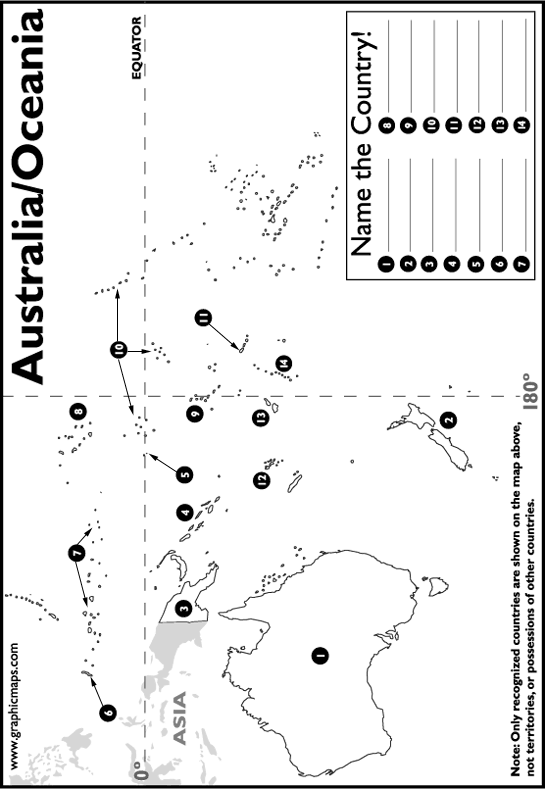
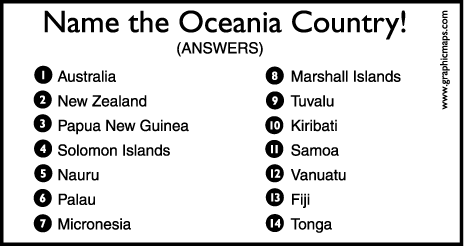
Color map of Australia and other information here, at factmonster.com
Explorers of Australia
Students select or are assigned an explorer to research and write about using the guide that follows. Students will be assigned to give a oral report about their explorer. Each report should include a student's drawing of their explorer or a map showing areas of the globe that particular explorer traveled, (or both!)
Explorers:
Nicholas Baudin
Robert O’Hara Burke and William John Wills
Allan Cunningham
William Dampier
Edward John Eyre
Matthew Flinders
Dirck Hartog
William Hovell and Hamilton Hume
Willem Jansz
Edmund Kennedy
Thomas L. Mitchell
John Oxley
Arthur Phillip
Paul Edmund de Strzelecki
Abel Tasman
Captain James Cook
Explorers Information Guide
Your Name:_______________
Date: _______________
Continent of Study: ______________
Date: _______________
Continent of Study: ______________
Name of Explorer: _____________________________________________________
__________________ ______________________
Date of birth Date of death
Nationality: _______________________________________
Sponsoring Country: _________________________________
List any modes of transportation used during their expeditions:
______________________ _____________________
____________________ ______________________
_____________________ _______________________
_______________________
Explorer's Personal History:______________________ _____________________
____________________ ______________________
_____________________ _______________________
_______________________
Parents Names:___________________________ _____________________________
Age at time of exploration: ____
Were they married: yes no
Children: yes no How many? ___________
Names: ______________________ _____________________
____________________ ______________________
_____________________ _______________________
______________________ _____________________
____________________ ______________________
_____________________ _______________________
____________________
What language (s) did this person speak?
______________________ _____________________
____________________ ______________________
_____________________ _______________________
_______________________
Financial Status: rich poor middle
Religion: __________________________
Education: ____________________________
Which best classifies your explorer's reasons for exploring the world?
Inquisitiveness, financial gain, religious reasons, adventure
scientific discovery, competition, relocation, other
Explain:________________________________________________________________________________________________________________________________________________________________________________________________________________________________________________
This person is most famous for: __________________________________________
__________________________________________________________________
But is also known for:___________________________________________________ ___________________________________________________________________
Did this explorer have traveling Companions: no yes yes, but unnamed
Names: ___________________ ____________________ ___________________ ____________________ ____________________
Sources I used for my information:
1.
2.
3.
Fun facts and things I liked about this person:
Discover Australia, New Zealand and Oceania
Things to Learn and Do
Choose some aspect of the land down under to research and report about. (You may use any sources of interest to you. You may also click on the added links for some great helps.)
Australian and related things to submerse your thinking and learning in may include:
-Coral Reef
-Oceanic Animals
-Koalas
-Animals of New Zealand and Australia
-Oceania
-Aboriginal Bark Painting- Lesson idea here: Aboriginal Art Lesson
more samples of aboriginal art also See Enchanted Learning.com
-Strine Speak...Australian lingo
Learn Australian slang and make up an Aussie story or poem using as many of these Australian “slang” words as you can!
-Aussie Folk Songs: Tie Me Kangaroo Down, Waltzing Matilda,
-make a didgeridoo
-Ayers Rock
-Sydney Opera House
Asia
Maps of Asia
Here are some maps to help you in learning about Asia
Blackline map no. 1
Blackline map with answers no. 2
You can always find many helpful maps, information and activities at Enchanted Learning but for some you may have to be a member to access completely.
Factmonster.com at: (option No. 3) Asia
List of Asian countries:
Afghanistan,
Bahrain, Bangladesh, Bhutan, Brunei,
Cambodia, China, Cyprus,
East Timor,
India, Indonesia, Iran, Iraq, Israel,
Japan, Jordan,
Kazakhastan, Kuwait, Kyrgyzstan,
Laos, Lebanon,
Malaysia, Maldives, Mongolia, Myanmar,
Nepal, North Korea,
Oman,
Pakistan, Philippines,
Qatar,
Russia,
Saudi Arabia, Singapore, South Korea, Shri Lanka, Syria,
Taiwan, Tajikistan, Thailand, Turkey, Turkmenistan
United Arab Emirates, Uzebekistan,
Vietnam,
Yemen
Asia's Explorers
Students select or are assigned an explorer to research and write about using the guide that follows. Students will be assigned to give a oral report about their explorer. Each report should include a student's drawing of their explorer or a map showing areas of the globe that particular explorer traveled, (or both!)
EXPLORER LIST
Marco Polo
Nicolò Polo
Henri Mouhot
Lucy Atkinson
Carl Bock
Sven Hedin
Robert Burns,
Giovanni de Plano (or Piano) Carpini
A.W. Nieuwenhuis,
Ibn Battuta
Giovanni da Montecorvino
Frya Stark
Clarence Dalrymple Bruce
Francis Garnier (with Doudart de Lagrée)
J.G. Scott Burma
Dervla Murphy
Edmund Hillary
Nikolai Przhevalski.
Explorers Information Guide
Name of Explorer: _____________________________________________________
__________________ ______________________
Date of birth Date of death
Nationality: _______________________________________
Sponsoring Country: _________________________________
Parents Names:___________________________ _____________________________
Age at time of exploration: ____
Were they married: yes no
Children: yes no How many? ___________
Names: ______________________ _____________________
____________________ ______________________
_____________________ _______________________
______________________ _____________________
____________________ ______________________
_____________________ _______________________
____________________
What language (s) did this person speak?
______________________ _____________________
____________________ ______________________
_____________________ _______________________
_______________________
Financial Status: rich poor middle
Religion: __________________________
Education: ____________________________
Which best classifies your explorer's reasons for exploring the world?
Inquisitiveness, financial gain, religious reasons, adventure
scientific discovery, competition, relocation, other
Explain:________________________________________________________________________________________________________________________________________________________________________________________________________________________________________________
This person is most famous for: __________________________________________
__________________________________________________________________
But is also known for:___________________________________________________ ___________________________________________________________________
Did this explorer have traveling Companions: no yes yes, but unnamed
Names: ___________________ ____________________ ___________________ ____________________ ____________________
Sources I used for my information:
1.
2.
3.
Fun facts and things I liked about this person:
Here are some maps to help you in learning about Asia
Blackline map no. 1
Blackline map with answers no. 2
You can always find many helpful maps, information and activities at Enchanted Learning but for some you may have to be a member to access completely.
Factmonster.com at: (option No. 3) Asia
List of Asian countries:
Afghanistan,
Bahrain, Bangladesh, Bhutan, Brunei,
Cambodia, China, Cyprus,
East Timor,
India, Indonesia, Iran, Iraq, Israel,
Japan, Jordan,
Kazakhastan, Kuwait, Kyrgyzstan,
Laos, Lebanon,
Malaysia, Maldives, Mongolia, Myanmar,
Nepal, North Korea,
Oman,
Pakistan, Philippines,
Qatar,
Russia,
Saudi Arabia, Singapore, South Korea, Shri Lanka, Syria,
Taiwan, Tajikistan, Thailand, Turkey, Turkmenistan
United Arab Emirates, Uzebekistan,
Vietnam,
Yemen
Asia's Explorers
Students select or are assigned an explorer to research and write about using the guide that follows. Students will be assigned to give a oral report about their explorer. Each report should include a student's drawing of their explorer or a map showing areas of the globe that particular explorer traveled, (or both!)
EXPLORER LIST
Marco Polo
Nicolò Polo
Henri Mouhot
Lucy Atkinson
Carl Bock
Sven Hedin
Robert Burns,
Giovanni de Plano (or Piano) Carpini
A.W. Nieuwenhuis,
Ibn Battuta
Giovanni da Montecorvino
Frya Stark
Clarence Dalrymple Bruce
Francis Garnier (with Doudart de Lagrée)
J.G. Scott Burma
Dervla Murphy
Edmund Hillary
Nikolai Przhevalski.
Explorers Information Guide
Your Name:_______________
Date: _______________
Continent of Study: ______________
Date: _______________
Continent of Study: ______________
Name of Explorer: _____________________________________________________
__________________ ______________________
Date of birth Date of death
Nationality: _______________________________________
Sponsoring Country: _________________________________
List any modes of transportation used during their expeditions:
______________________ _____________________
____________________ ______________________
_____________________ _______________________
_______________________
Explorer's Personal History:______________________ _____________________
____________________ ______________________
_____________________ _______________________
_______________________
Parents Names:___________________________ _____________________________
Age at time of exploration: ____
Were they married: yes no
Children: yes no How many? ___________
Names: ______________________ _____________________
____________________ ______________________
_____________________ _______________________
______________________ _____________________
____________________ ______________________
_____________________ _______________________
____________________
What language (s) did this person speak?
______________________ _____________________
____________________ ______________________
_____________________ _______________________
_______________________
Financial Status: rich poor middle
Religion: __________________________
Education: ____________________________
Which best classifies your explorer's reasons for exploring the world?
Inquisitiveness, financial gain, religious reasons, adventure
scientific discovery, competition, relocation, other
Explain:________________________________________________________________________________________________________________________________________________________________________________________________________________________________________________
This person is most famous for: __________________________________________
__________________________________________________________________
But is also known for:___________________________________________________ ___________________________________________________________________
Did this explorer have traveling Companions: no yes yes, but unnamed
Names: ___________________ ____________________ ___________________ ____________________ ____________________
Sources I used for my information:
1.
2.
3.
Fun facts and things I liked about this person:
Saturday, August 8, 2009
Discover Asia
Things to Learn and Do
Choose some aspect of Asia to research and report about. (You may use any sources of interest to you. You may also click on the added links for some great helps.)
Things to submerse your thinking and learning about Asia may include:
-Siberia
-Russia
-learn to count or say new words in Chinese or Japanese or Arabic
-The Caste system in India
-The Great Wall of China
The Wall stretches about 2400 km (about 1500 mi) along China's northern border. In the 15th and 16th centuries the Ming dynasty constructed the fortifications to protect China against the Mongols. Parts of the Ming walls, including this section near Beijing, have been restored in the 20th century.
-Mt. Fuji
-Oil fields of Saudi Arabia, the production of petroleum and oil
-Ghandi
- Mt. Everest, located in Asia, is the highest mountain in the world. It reaches 8848 m (29,028 ft), high and is part of the Himalayas on the frontier of Nepal and Tibet. Numerous groups tried to reach the summit before the successful attempt by two members of a
British expedition on May 29, 1953.
- The Taj Mahal and the elaborate formal gardens surrounding it were created in honor of the
wife of the Mughal emperor Shah Jahan, who died in 1631. Both he and his wife are buried in this white marble mausoleum in Agra, India.
-Kites, (very popular in China)
-Tigers
-Learn the history of and write your own haiku
-Pandas
-Dali Lama
-Origami, Chinese papercutting
-Spices, identification, uses and history (See Below for Study idea)
-Rivers: Learn names and locations of major rivers in Asia
-Flags: The different flags of Asian countries
-Dragons, legends and lore (See Below for Study idea)
-Learn to eat with chopsticks
-Silk Road
-Arab Israeli conflict
-hanging gardens of Babylon (Hanging Gardens of Semiramis,)
Here is a study idea on spice and spices:
Some notable spices are: cloves, cinnamon, saffron, nutmeg, cardamom, ginger, and
turmeric. Which have you tried? Choose a spice on the list and learn about it.
1. Find out the country of origin for your spice. Find this country on your map.
2. How is the taste of this spice described?
3.How valuable is this spice today? What was it’s value to people over 500 years ago?
4. What is the difference between an herb and a spice?
5. Try to find two different brands of your spice at the store and compare prices.
Spices are usually sold by the ounce. Figure out the cost of your spices by the pound.
6. What part of the plant does your spice come from?
7. What does the plant look like? Draw the plant the spice is derived from.
8. You may choose to do the same for several spices.
Here is a study idea on Dragons:
"Dragons" have been drawn, written about and told about since the beginning of recorded history and legends and pictures telling stories about them can be found in every part of the world, Africa, India, Europe, the Middle East, and the Orient.
RESEARCH
1. Look up “dragon” in a dictionary. Where does the word come from? What does the word mean?
2. Look up and read about dragons in the encyclopedia. At the end of the article you will find several additional references. Read any that are of interest to you.
3. Can you name any famous names in legends who were known as dragon slayers?
What stories do you know that have dragons as characters?
Look for and read some stories that have a dragon in them
4. What special characteristics do dragons have?
5. Draw and name your favorite dragon.
FAMILY DISCUSSION
Think about these questions and answer them with your family.:
a. Do dragons exist today?
Explain.
b Are dragons real or make-believe?
Were dragons real and alive or did people imagine them and make them up?
Are dinosaurs dragons?
Support your answers with facts as you talk about dragons.
c. Think about the special characteristics of dragons. (You named some in question 4
above.) Are there any animals you know about that make you think about dragons?
Explain how and why.
d. Some dragons we said top be fire breathing, is it possible for a real, living creature to
breathe fire? Why or why not?
e Imagine: If you were a scientist on a quest to find out about the existence of dragons, what evidences would you look for?
f. If a live fire-breathing or flying “dragon” were found today what do you think public response would be? What would happen to the dragon?
Choose some aspect of Asia to research and report about. (You may use any sources of interest to you. You may also click on the added links for some great helps.)
Things to submerse your thinking and learning about Asia may include:
-Siberia
-Russia
-learn to count or say new words in Chinese or Japanese or Arabic
-The Caste system in India
-The Great Wall of China
The Wall stretches about 2400 km (about 1500 mi) along China's northern border. In the 15th and 16th centuries the Ming dynasty constructed the fortifications to protect China against the Mongols. Parts of the Ming walls, including this section near Beijing, have been restored in the 20th century.
-Mt. Fuji
-Oil fields of Saudi Arabia, the production of petroleum and oil
-Ghandi
- Mt. Everest, located in Asia, is the highest mountain in the world. It reaches 8848 m (29,028 ft), high and is part of the Himalayas on the frontier of Nepal and Tibet. Numerous groups tried to reach the summit before the successful attempt by two members of a
British expedition on May 29, 1953.
- The Taj Mahal and the elaborate formal gardens surrounding it were created in honor of the
wife of the Mughal emperor Shah Jahan, who died in 1631. Both he and his wife are buried in this white marble mausoleum in Agra, India.
-Kites, (very popular in China)
-Tigers
-Learn the history of and write your own haiku
-Pandas
-Dali Lama
-Origami, Chinese papercutting
-Spices, identification, uses and history (See Below for Study idea)
-Rivers: Learn names and locations of major rivers in Asia
-Flags: The different flags of Asian countries
-Dragons, legends and lore (See Below for Study idea)
-Learn to eat with chopsticks
-Silk Road
-Arab Israeli conflict
-hanging gardens of Babylon (Hanging Gardens of Semiramis,)
Here is a study idea on spice and spices:
Spice is Nice
What spices do you like? Imagine for a moment what life would be like without being able to add such flavors to your food. Where do the spices you like come from? How much do they cost today? What was their value to people long ago?Some notable spices are: cloves, cinnamon, saffron, nutmeg, cardamom, ginger, and
turmeric. Which have you tried? Choose a spice on the list and learn about it.
1. Find out the country of origin for your spice. Find this country on your map.
2. How is the taste of this spice described?
3.How valuable is this spice today? What was it’s value to people over 500 years ago?
4. What is the difference between an herb and a spice?
5. Try to find two different brands of your spice at the store and compare prices.
Spices are usually sold by the ounce. Figure out the cost of your spices by the pound.
6. What part of the plant does your spice come from?
7. What does the plant look like? Draw the plant the spice is derived from.
8. You may choose to do the same for several spices.
Here is a study idea on Dragons:
Dragon Speak
Ancient peoples all over the world have told of unusual, reptile-like creatures that once roamed the earth. There were many different names for them. The ancient people of Europe called them "dragons." Asian peoples have legends of dragons too."Dragons" have been drawn, written about and told about since the beginning of recorded history and legends and pictures telling stories about them can be found in every part of the world, Africa, India, Europe, the Middle East, and the Orient.
RESEARCH
1. Look up “dragon” in a dictionary. Where does the word come from? What does the word mean?
2. Look up and read about dragons in the encyclopedia. At the end of the article you will find several additional references. Read any that are of interest to you.
3. Can you name any famous names in legends who were known as dragon slayers?
What stories do you know that have dragons as characters?
Look for and read some stories that have a dragon in them
4. What special characteristics do dragons have?
5. Draw and name your favorite dragon.
FAMILY DISCUSSION
Think about these questions and answer them with your family.:
a. Do dragons exist today?
Explain.
b Are dragons real or make-believe?
Were dragons real and alive or did people imagine them and make them up?
Are dinosaurs dragons?
Support your answers with facts as you talk about dragons.
c. Think about the special characteristics of dragons. (You named some in question 4
above.) Are there any animals you know about that make you think about dragons?
Explain how and why.
d. Some dragons we said top be fire breathing, is it possible for a real, living creature to
breathe fire? Why or why not?
e Imagine: If you were a scientist on a quest to find out about the existence of dragons, what evidences would you look for?
f. If a live fire-breathing or flying “dragon” were found today what do you think public response would be? What would happen to the dragon?
Friday, August 7, 2009
Europe
Maps of Europe
A nice map with lots of information about Europe can be found at:
Factmonster.net
Blackline maps.
Enchanted Learning's countries of Europe helps here.
A good list of European countries and flags, capital cities and tother information can be found here as listed at en.wikipedia.org.
Countries in Europe are:
Europe's Explorers
Students select or are assigned an explorer to research and write about using the guide that follows. Students will be assigned to give a oral report about their explorer. Each report should include a student's drawing of their explorer or a map showing areas of the globe that particular explorer traveled, (or both!)
Explorer List
Alexander the Great
Napoleon
Goncalo Velho
Hasekura Tsunenaga
Kate Marsden
Margaret Bourke-White
Pytheas of Massilia
Rabban Bar Sauma
Ottar
Ibn Batuta,
Hekataios of Miletus
Herodotus
Strabo
Gnaeus Julius Agricola
Decimus Junius Brutus
Information Guide
Name of Explorer: _____________________________________________________
__________________ ______________________
Date of birth Date of death
Nationality: _______________________________________
Sponsoring Country: _________________________________
Parents Names:___________________________ _____________________________
Age at time of exploration: ____
Were they married: yes no
Children: yes no How many? ___________
Names: ______________________ _____________________
____________________ ______________________
_____________________ _______________________
______________________ _____________________
____________________ ______________________
_____________________ _______________________
____________________
What language (s) did this person speak?
______________________ _____________________
____________________ ______________________
_____________________ _______________________
_______________________
Financial Status: rich poor middle
Religion: __________________________
Education: ____________________________
Which best classifies your explorer's reasons for exploring the world?
Inquisitiveness, financial gain, religious reasons, adventure,
scientific discovery, competition, relocation, other
Explain:________________________________________________________________________________________________________________________________________________________________________________________________________________________________________________
This person is most famous for: __________________________________________
__________________________________________________________________
But is also known for:___________________________________________________ ___________________________________________________________________
Did this explorer have traveling Companions: no yes yes, but unnamed
Names: ___________________ ____________________ ___________________ ____________________ ____________________
Sources I used for my information:
1.
2.
3.
Fun facts and things I liked about this person:
A nice map with lots of information about Europe can be found at:
Factmonster.net
Blackline maps.
Enchanted Learning's countries of Europe helps here.
A good list of European countries and flags, capital cities and tother information can be found here as listed at en.wikipedia.org.
Countries in Europe are:
Europe's Explorers
Students select or are assigned an explorer to research and write about using the guide that follows. Students will be assigned to give a oral report about their explorer. Each report should include a student's drawing of their explorer or a map showing areas of the globe that particular explorer traveled, (or both!)
Explorer List
Alexander the Great
Napoleon
Goncalo Velho
Hasekura Tsunenaga
Kate Marsden
Margaret Bourke-White
Pytheas of Massilia
Rabban Bar Sauma
Ottar
Ibn Batuta,
Hekataios of Miletus
Herodotus
Strabo
Gnaeus Julius Agricola
Decimus Junius Brutus
Information Guide
Your Name:_______________
Date: _______________
Continent of Study: ______________
Date: _______________
Continent of Study: ______________
Name of Explorer: _____________________________________________________
__________________ ______________________
Date of birth Date of death
Nationality: _______________________________________
Sponsoring Country: _________________________________
List any modes of transportation used during their expeditions:
______________________ _____________________
____________________ ______________________
_____________________ _______________________
_______________________
Explorer's Personal History:______________________ _____________________
____________________ ______________________
_____________________ _______________________
_______________________
Parents Names:___________________________ _____________________________
Age at time of exploration: ____
Were they married: yes no
Children: yes no How many? ___________
Names: ______________________ _____________________
____________________ ______________________
_____________________ _______________________
______________________ _____________________
____________________ ______________________
_____________________ _______________________
____________________
What language (s) did this person speak?
______________________ _____________________
____________________ ______________________
_____________________ _______________________
_______________________
Financial Status: rich poor middle
Religion: __________________________
Education: ____________________________
Which best classifies your explorer's reasons for exploring the world?
Inquisitiveness, financial gain, religious reasons, adventure,
scientific discovery, competition, relocation, other
Explain:________________________________________________________________________________________________________________________________________________________________________________________________________________________________________________
This person is most famous for: __________________________________________
__________________________________________________________________
But is also known for:___________________________________________________ ___________________________________________________________________
Did this explorer have traveling Companions: no yes yes, but unnamed
Names: ___________________ ____________________ ___________________ ____________________ ____________________
Sources I used for my information:
1.
2.
3.
Fun facts and things I liked about this person:
Discover Europe
Things to Learn and Do
(You may use any sources of interest to you. You may also click on the added links for some great helps.)
Label, learn and color the European Countries on a map of Europe.
Label, learn and color the British Isles on a map.
Things to Learn and Do
Choose some aspect of Europe to research and report about. (You may use any sources of interest to you. You may also click on the added links for some great helps.)
European things to submerse your thinking and learning about may include:
-Read and learn about the EURO.
-Castles of Europe
-The Middle Ages
-Leonardo Da Vinci
-Montmartre
-Transportation in Europe (Venice in particular)
-Michaelangelo
-Pridnestrovie
-The Autoban
-Berlin Wall
-Louvre Museum of Art
-Eiffel Tower
-Vikings
-Food of Europe
-The Vatican and the Holy See
-Windmills
-Danube river
(You may use any sources of interest to you. You may also click on the added links for some great helps.)
Label, learn and color the European Countries on a map of Europe.
Label, learn and color the British Isles on a map.
Things to Learn and Do
Choose some aspect of Europe to research and report about. (You may use any sources of interest to you. You may also click on the added links for some great helps.)
European things to submerse your thinking and learning about may include:
-Read and learn about the EURO.
-Castles of Europe
-The Middle Ages
-Leonardo Da Vinci
-Montmartre
-Transportation in Europe (Venice in particular)
-Michaelangelo
-Pridnestrovie
-The Autoban
-Berlin Wall
-Louvre Museum of Art
-Eiffel Tower
-Vikings
-Food of Europe
-The Vatican and the Holy See
-Windmills
-Danube river
Subscribe to:
Posts (Atom)